By JINXUAN Flooring technical team · Updated September 2026 · 8 min read
PVC Flooring Import Guide for Latin America
A practical, fact-based playbook for distributors, contractors and project buyers importing homogeneous vinyl sheet, SPC and accessories from China.
At a glance
- Product match: homogeneous sheet for healthcare/transit, SPC for retail/offices, ESD grade for electronics/cleanrooms.
- Key specs to verify: wear-layer thickness, total thickness/roll width, slip resistance (DIN 51130), fire class (EN 13501-1), ESD resistance (IEC 61340).
- Common standards: EN 649 / ISO 10581 (homogeneous), EN 14041 (resilient floor coverings), EN 660-2 (wear resistance).
- Start terms: FOB or CIF; DDP is simplest but most expensive.
- LatAm certification: NOM (MX), INMETRO (BR), IRAM/SAC (AR), technical regs (CO, CL, PE). Confirm scope with a licensed broker.
1. Choose the right product for your application
| Application | Recommended product | Why |
|---|---|---|
| Hospitals / labs / cleanrooms | Homogeneous sheet | Seamless, chemical-resistant, heat-weldable |
| Electronics / operating theatres | Conductive ESD sheet | Controls static; EN/IEC 61340 |
| Schools / transit / retail | Homogeneous or SPC | Balanced durability vs. install speed |
| Offices / apartments | SPC click flooring | Rigid core, waterproof, fast install |
| Data centers / warehouses | ESD tile / heavy-duty sheet | Static control + rolling-load resistance |
2. Technical specs that actually matter
Always ask for the test method, not just the number. A lower FOB price with missing certificates is usually the most expensive mistake.
- Wear layer: 0.3 / 0.5 / 0.7 mm → light / medium / heavy traffic.
- Total thickness & width: 1.8–2.0 m rolls standard; tiles 600×600 mm.
- Slip resistance: R9–R13 (DIN 51130) for wet/ramped areas.
- Fire: Bfl-s1 (EN 13501-1) for public buildings.
- ESD: 104–106 Ω (IEC 61340 / EN 14041).
- Product standards: EN 649, ISO 10581, EN 14041, EN 660-2.
3. Incoterms — who carries the risk
Match the term to your logistics experience, not just the lowest price.
- EXW — lowest price, you arrange everything from factory gate.
- FOB — seller loads vessel; you control ocean freight and insurance.
- CIF — seller pays freight + insurance to destination port; you handle import clearance.
- DDP — delivered duty paid; simplest but highest cost.
4. Estimate landed cost
Landed cost = product (FOB) + ocean freight + insurance + duty + VAT/local tax + inland.
- Mexico: ~10–15% duty + VAT 16%.
- Brazil: INMETRO scope + II + IPI + ICMS (confirm with broker).
- Argentina: IRAM/SAC + VAT.
- Colombia / Chile / Peru: technical regulations + VAT.
5. Certification & documents by market
JINXUAN prepares documentation and can coordinate third-party testing; confirm the current scope with your licensed customs broker early.
- Mexico: NOM marking; Spanish user/install manual.
- Brazil: INMETRO for construction products; Portuguese documentation.
- Argentina: IRAM/SAC approval pathway.
- Andean region: local technical regulations and Spanish labels.
6. Sample package & pre-shipment checklist
Never place a container order without approving a complete sample kit first.
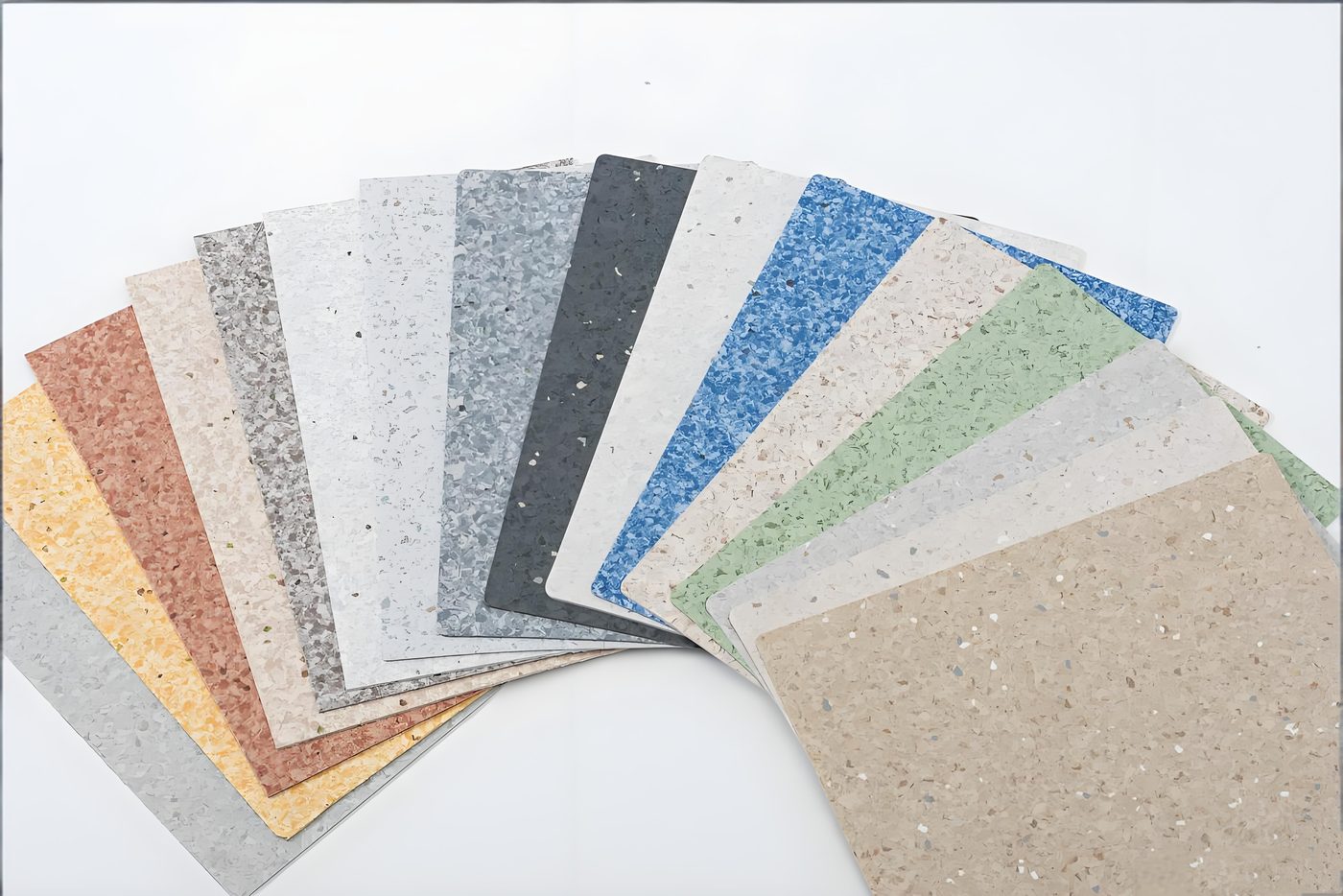
- 3–5 full boards/tiles and a cross-section cut sample.
- Product datasheet with tested standards and certificate references.
- Installation instructions and warranty terms.
- Pre-shipment QC report or third-party inspection (SGS/BV/Intertek).
7. MOQ, customization & lead time
MOQ varies by product. Custom color, thickness and roll width are available. Production is typically 15–30 days after deposit and sample approval. Sea transit to major LatAm ports is about 25–40 days.
8. Verify your supplier before paying
- Request factory audit video or live walkthrough.
- Approve physical samples before production starts.
- Ask for QC reports and test certificates; request certificate numbers.
- Start with a small trial order.
- Use T/T deposit + balance against B/L; consider L/C for large first orders.
9. Logistics, ports & container loading
Load ports: Shanghai / Ningbo / Qingdao. Destination: Manzanillo & Lázaro Cárdenas (MX), Callao (PE), Santos & Paranaguá (BR), Buenos Aires (AR), Buenaventura (CO). A 20ft container holds roughly 20–25 t of rolled goods; a 40ft high-cube about 25–28 t. FCL is preferred for rolled sheet to avoid transshipment damage.
10. Common mistakes buyers make
Choosing the lowest price → recycled-content failures, odor, curling. Wrong wear layer for the traffic. Ignoring slip/fire ratings for public buildings. Approving color without a physical sample. Paying full advance to an unverified supplier. Assuming every “PVC” meets the same standard.
FAQ
Q: What PVC flooring suits healthcare and cleanrooms?
A: Homogeneous vinyl sheet, preferably conductive ESD grade for static-control areas — seamless, chemical-resistant, easy to sanitize and heat-weldable.
Q: Which Incoterm is best for first-time importers?
A: FOB or CIF are common starting points; FOB keeps freight under your control, CIF includes freight and insurance to the destination port. DDP is simplest but costs more.
Q: Do I need NOM or INMETRO certification?
A: Mexico requires NOM marking for many building products; Brazil requires INMETRO for a range of construction products. Confirm the current scope with your broker; JINXUAN prepares documentation and can arrange third-party testing.
Q: What is a typical MOQ and lead time?
A: MOQ varies by product; custom color, thickness and roll width are available. Production is typically 15–30 days after deposit and sample approval; sea transit to major LatAm ports is about 25–40 days.
Q: How do I verify a supplier before paying?
A: Request a factory audit video or live walkthrough, approve physical samples, ask for QC reports and test certificates, and start with a small trial order. Use a T/T deposit with balance against bill of lading; consider L/C for larger first orders.
Q: What standards should I reference in a project specification?
A: Start with EN 649 or ISO 10581 for homogeneous sheet, EN 14041 for resilient floor coverings, EN 13501-1 for fire reaction, DIN 51130 for slip resistance, and EN/IEC 61340 for ESD floors.
Q: What is the difference between homogeneous and SPC flooring?
A: Homogeneous vinyl sheet is a single-layer, seamless roll product ideal for hygiene-critical and heavy-traffic areas. SPC is a rigid click-lock tile/plank with a stone-plastic composite core, better suited for dry commercial and residential spaces.
Q: Can I mix products in one container?
A: Yes, JINXUAN can load homogeneous sheet, SPC, accessories and tools in the same FCL shipment, subject to compatibility and weight distribution.